


Phone:
+86-21-69895597



Views: 0 Author: Justine Murphy Publish Time: 2025-10-23 Origin: https://www.laserfocusworld.com/test-measurement/article/55310469/nir-fluorescent-nanosensor-detects-plant-growth-hormone
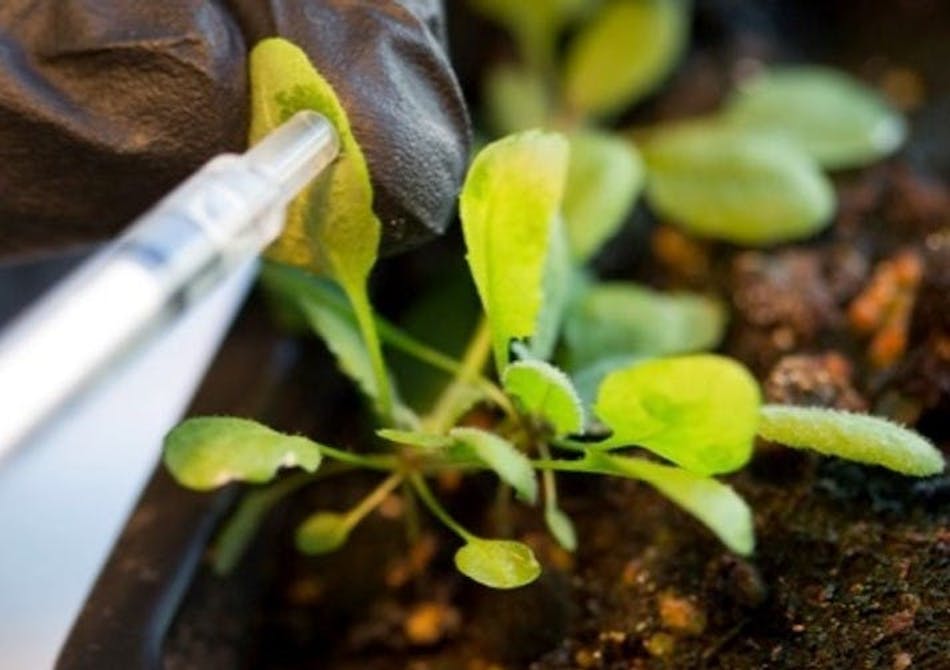
Working alongside teams from Temasek Life Sciences Laboratory in Singapore and the Massachusetts Institute of Technology (MIT), researchers from the Singapore-MIT Alliance for Research and Technology interdisciplinary research group’s Disruptive and Sustainable Technologies for Agricultural Precision (SMART DiSTAP) recently developed a near-infrared (NIR) fluorescent nanosensor that can detect indole-3-acetic acid (IAA), the primary plant growth hormone.
The technology uses Corona Phase Molecular Recognition (CoPhMoRe), a nanotechnology approach designed by the SMART DiSTAP and MIT researchers. It enables the design of highly selective sensors by coating single-walled carbon nanotubes with custom synthetic polymers.
“These polymers form a precise ‘corona phase,’ or binding pocket, which can recognize and respond to specific molecules,” says Duc Thinh Khong, a research scientist at SMART DiSTAP.
Developing the nanosensor involved learning more about how IAA naturally binds to its plant receptor (TIR1). The team was then able to engineer polymers to mimic that natural interaction, which allows the sensor to bind IAA with high sensitivity and selectivity without requiring genetic modification.
Khong says the team found that when IAA binds to the polymer-coated nanotubes, it changes the fluorescence intensity within the NIR spectrum. This allows real-time, noninvasive monitoring across various plant tissues and species. The sensor is also biocompatible and can bypass interference from chlorophyll, making it effective even in densely pigmented crops.
Existing methods for detecting IAA, such as liquid chromatography, require destructive sampling (harming or removing parts of the plant) and often measure downstream effects rather than IAA itself. These techniques are also limited in their applicability across different plant species.
And because IAA is a small molecule, it can be difficult to track in real time. Conventional biosensors often rely on fluorescent proteins genetically inserted into the plant, which Khong says isn’t always practical or scalable.
The researchers’ nanosensor technology “overcomes these limitations by enabling real-time, nondestructive, and direct monitoring of IAA in various plant tissues,” he says. “This allows researchers to study dynamic hormone changes across plant types and environmental conditions with high precision.”
“This research was prompted by the need for disruptive technologies that can revolutionize urban agriculture and enhance crop yields,” Khong says, adding that the team’s work helps to support Singapore’s “30 by 30” food security goal of locally producing 30% of that region’s nutritional needs by 2030.
“In urban farms, especially in space-limited cities like Singapore, using nanosensors to detect early stress in common and high-valued leafy greens helps optimize growth conditions and boost crop yields,” he says. “Our nanosensor’s noninvasive and species-agnostic design also makes it adaptable for use in other countries with urban farming ambitions, where space constraints and food security are key concerns.”
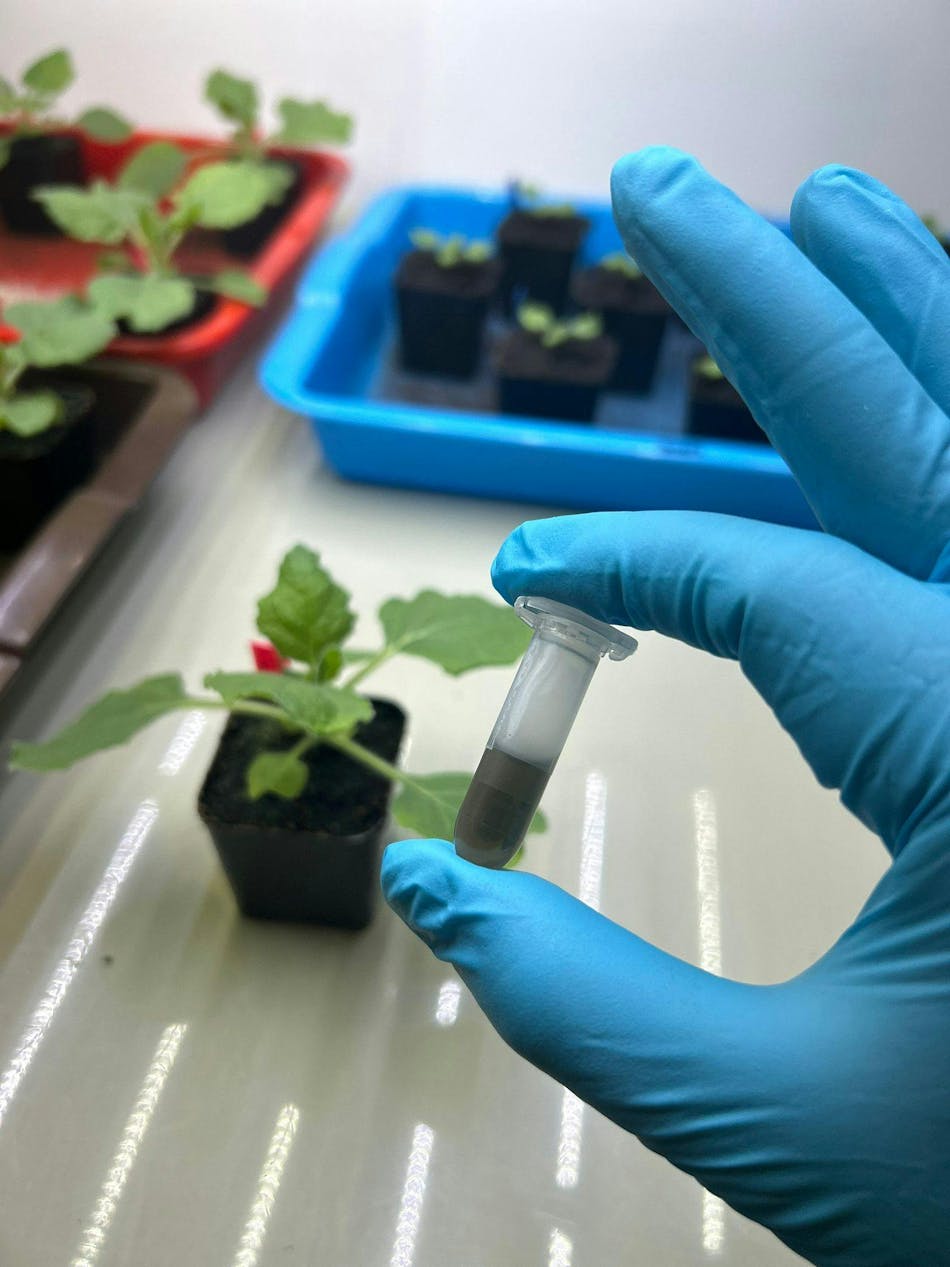
Over the next 12 months, Khong says the team will advance multiplexing by integrating IAA sensors with gibberellins, plant hormones that regulate various developmental processes, as well as salicylic acid and hydrogen peroxide. This is done via microneedle applicators for precise and comprehensive plant hormones profiling in leaves or roots.
The researchers are now exploring pilot trials with Singapore’s urban farms to deploy sensors on in-demand leafy greens. “Looking ahead, the long-term vision is to integrate multiple sensing platforms to simultaneously detect IAA and its related metabolites,” Khong says. This will offer a comprehensive view of hormone signaling for deeper insights into how plants respond to stress.
He says the team is also advancing microneedle-based technologies for highly localized, tissue-specific sensing. And they plan to work with industrial urban farming partners to translate these innovations into practical, field-ready tools to pave the way for next-generation precision agriculture.
“This breakthrough provides a universal, field-deployable tool for tracking hormone dynamics,” Khong says, “which supports both fundamental plant biology research and practical use in precision agriculture.”

